Monday, 26 July 2010

PM says Cambodia must respect borders


via Khmer NZ

Published: 26/07/2010

Prime Minister Abhisit Vejjajiva has vowed that Thailand will not accept any loss of its territorial sovereignty following Cambodia's announcement of a proposed management plan for the Preah Vihear temple

Abhisit: ‘Sovereignty the top priority’

In his weekly address yesterday, Mr Abhisit said he had ordered Natural Resources and Environment Minister Suwit Khunkitti to oppose the management plan Cambodia was presenting at a Unesco meeting in the Brazilian capital of Brasilia, which began yesterday and will continue until Aug 3.

Thailand objects to the Cambodian management plan because it includes the disputed 4.6 square kilometre buffer zone claimed by the two countries. The Thai side says sovereignty over the area has yet to be settled.

Mr Abhisit said the Foreign Ministry would lodge a protest if it finds that Cambodia was threatening Thailand's territorial sovereignty.

He said the government would not recognise the map that Cambodia is expected to submit to the World Heritage Committee, as the 1962 map, which awarded Preah Vihear to Cambodia, did not demarcate the border between the two countries.

Tensions have been high and troop stand-offs frequent along the disputed border since July 2008, when the Preah Vihear temple was granted World Heritage status by Unesco.

Mr Abhisit said that if the heritage committee approved Cambodia's management plan, Thailand had a strategy in place to oppose the decision.

Mr Abhisit had earlier dismissed calls from the People's Alliance for Democracy for Thailand to boycott the World Heritage Committee meeting in Brazil.

Democrat Party spokesman Buranat Samutharak has reiterated the demarcation of the area around Preah Vihear must be settled before Cambodia can propose a plan to unilaterally manage the site.

He said he believed the Cambodian side would cite an earlier communique from the Samak Sundaravej administration that acquiesced to Phnom Penh's right to apply for World Heritage status for the site alone.

The joint declaration was signed by former foreign minister Noppadon Pattama and Cambodian Deputy Prime Minister Sok An on June 18, 2008, a day after the Thai government gave it the green light.

The Constitution Court later ruled the communique was unconstitutional as it bypassed parliamentary approval.

Sunday, 25 July 2010

VOA Announcement: Live webcast from the KR Tribunal by RFA on 26 July 2010


On 26 July 2010, at 10AM, Radio Free Asia will webcast live from the KR Tribunal regarding the verdict for Duch.

Click here for the RFA link

Asia's most devastating droughts reconstructed

via Khmer NZ

By Science Daily
Saturday, July 24, 2010

By sampling the wood of thousands of ancient trees across Asia, scientists at Columbia University's Lamont-Doherty Earth Observatory assembled an atlas of past droughts, gauging their relative severity across vast expanses of time and space. "Global climate models fail to accurately simulate the Asian monsoon, and these limitations have hampered our ability to plan for future, potentially rapid and heretofore unexpected shifts in a warming world," said Edward Cook, head of Lamont's Tree Ring Lab, who led the study. "Reliable instrumental data goes back only until 1950. This reconstruction gives climate modelers an enormous dataset that may produce some deep insights into the causes of Asian monsoon variability." There is some evidence that changes in the monsoon are driven at least in part by cyclical changes in sea-surface temperatures. Some scientists have speculated that warming global temperatures could alter these cycles and possibly make some of them more intense, but at this point there is no consensus on whether or how they might change.

For some tree species, rainfall determines the width of their annual growth rings, and these rings are what the scientists were able to read. The researchers spent more than 15 years traveling across Asia to locate trees old enough to provide long-term records. The hunt took them to more than 300 sites, from Siberia down to Indonesia and northern Australia, as far west as Pakistan and as far east as Japan. The project involved collaborations with numerous national governments, local villages and other university scientists. "It's everything from low-land rain forests to high in the Himalayas," said study coauthor Kevin Anchukaitis, a Lamont tree ring scientist. "You have a tremendous diversity of environment, climate influences and species."

The tree-ring records in the study reveal at least four great droughts that are linked to catastrophic events in history. For starters, the study suggests that climate may have played a powerful role in the 1644 fall of China's Ming dynasty. The tree rings provide additional evidence of a severe drought in China referenced in some historical texts as the worst in five centuries. This study narrows it down to a three-year period, 1638-1641. The drought was most sharply expressed in northeastern China, near Beijing, and is thought to have influenced peasant rebellions that hastened the demise of the Ming.

Another severe monsoon failure came in 1756-1768, coinciding with the collapse of kingdoms in what are now Vietnam, Myanmar and Thailand. The drought roiled political structures all the way to Siberia, and the tree rings also indicate that western India was severely affected. This drought is not documented in historical records; scientists first identified it in teak rings from Thailand, and later in Vietnamese cypress trees. Some historians have speculated that climate must have played a role for such sweeping political changes to have happened simultaneously; fragmentary accounts suggest that dry periods may have been punctuated with devastating floods. The study appears to provide an explanation for the so-called "strange parallels" that Victor Lieberman, an historian at the University of Michigan, has spent his career studying. "It provides confirmation that there are very strong climate links between monsoon regimes in India, Southeast Asia and southern China," said Lieberman in an interview.

Then, the so-called East India drought hit in 1790-1796. This one appears to have been felt worldwide, spreading civil unrest and socioeconomic turmoil. For instance, in Mexico, water levels at Lake Pátzcuaro fell so much they gave rise to ownership disputes over the land that emerged. In Europe, drought led to crop failures that preceded the French Revolution. Famines hit India.

Perhaps the worst drought, the scientists found, was the Victorian-era "Great Drought" of 1876-1878. The effects were felt across the tropics; by some estimates, resulting famines killed up to 30 million people. According to the tree-ring evidence, the effects were especially acute in India, but extended as far away as China and present-day Indonesia. Colonial-era policies left regional societies ill-equipped to deal with the drought's consequences, as historian Mike Davis details in his book Late Victorian Holocausts. Famine and cholera outbreaks at this time in colonial Vietnam fueled a peasant revolt against the French.

The study follows a related report last month by the Lamont tree-ring team suggesting that dramatic variations in the monsoon may have influenced the collapse of the ancient Khmer civilization at Angkor nearly 600 years ago, in what is now Cambodia. That paper, appearing in the Proceedings of the National Academy of Sciences, showed evidence of a mega-drought in the wider region around Angkor from the 1340s to the 1360s, followed by a more severe but shorter drought from the 1400s to 1420s. The droughts were interspersed with severe flooding, and the kingdom collapsed shortly after. The scientist who led that study, Brendan Buckley, coauthored the present drought atlas.

Scientists aren't exactly sure how factors such as volcanic eruptions, greenhouse gases and variations in solar output combine to drive the many variations in the monsoon over the long term. Over shorter time periods, variations seem to be more closely linked to the El Niño-Southern Oscillation (ENSO), the warming and cooling of the tropical Pacific atmosphere-ocean system. Separate studies suggest that El Niño, the warm phase of ENSO, often coincides with a weak monsoon and droughts; it also seems linked to weather changes in Africa and parts of South America. The deadly 1876-1878 drought coincided with one of the most extreme El Niños of the last 150 years. However, the parallels are not perfect, so other factors may come into play at different times, including changes in snow cover over Asia and cycles of sea-surface temperature in the Indian Ocean. There is intense interest in how El Niño and other phenomena may be affected by a warming climate, and how monsoon extremes may affect the growing populations that depend on the rains. Southern China is currently suffering its worst drought in 80 to 100 years, bringing not only water shortages, but tensions with Southeast Asian nations downstream of its watersheds.

Data from the drought atlas is already providing information on particular regions, say the scientists. Using the Indonesia tree ring records, for example, Lamont scientist and study coauthor Rosanne D'Arrigo has reconstructed stream flow in Java's Citarum river basin, a region that waters much of Indonesia's rice. In a recent study in the journal Climate Dynamics, D'Arrigo found a close link between El Niños and weak monsoon rains or drought in Indonesia over the last 250 years.

The atlas is valuable to monsoon forecasters because the record is long enough and the spatial areas detailed enough that modelers can pick out short-term and long-term patterns, said Bin Wang, a meteorologist and monsoon modeler at the University of Hawaii who was not involved in the study. "It is extremely valuable for validating climate models' simulation and understanding their origins in terms of model physics," he said.

Thais 'must be on hand to object'


via Khmer NZ

PM REJECTS PAD CALLS FOR BOYCOTT

Published: 25/07/2010

Prime Minister Abhisit Vejjajiva has rejected calls from the People's Alliance for Democracy for Thailand to boycott a World Heritage Committee meeting in Brazil, saying its absence would not do the country any good.

Mr Abhisit said yesterday the Thai delegation must be there to raise objections if Cambodia proposes a plan to unilaterally manage the Preah Vihear world heritage site.

Natural Resources and Environment Minister Suwit Khunkitti is taking the Thai delegation to attend the 34th session of the WHC, part of Unesco, in Brazil.

Cambodia is expected to propose a management plan for the Preah Vihear temple and its buffer zone at the meeting, which ends on Aug 3.

The suggestion to boycott the meeting was made to force a postponement of WHC consideration of Cambodia's proposed management of Preah Vihear temple, as Thailand is among the commissioners.

"It doesn't do us any good if we boycott the meeting. If [the item] is tabled for consideration, we'll make an objection as we see it," the prime minister said.

Mr Suwit had told him that Cambodia would proceed with its unilateral management plan for the surrounding areas of Preah Vihear temple.

He said the minister - who met the United Nations Educational, Scientific and Cultural Organisation director during a stopover in Paris - made it clear that Thailand would object, even though the proposal is said not to show the border demarcation between Thailand and Cambodia.

Mr Abhisit has asked Mr Suwit to keep the government informed about the WHC meeting so it can act promptly if the Thai delegation needs support.

"We have to lobby the international community on the issue and follow the meeting closely. I have also told Mr Suwit to inform the cabinet if he needs its support," he said.

The Thai delegation could meet the Cambodia delegation and inform them of the Thai government's stance.

Mr Abhisit said Thailand and Cambodia may compete for the chance to host a WHC meeting in the next two years. He said Thailand will propose to host the WHC meeting.

Chum Mey, a survivor of the S-21 prison during the Khmer Rouge regime, walks near a portrait of Noun Chea, left, a former Khmer Rouge leader and right hand man to dictator Pol Pot, at the Tuol Sleng genocide museum, formerly the regime's notorious S-21 prison in Phnom Penh, Cambodia, Thursday, July 22, 2010. The U.N.-backed Khmer Rouge genocide tribunal is scheduled to deliver its verdict on Monday, July 26, 2010, against Kaing Guek Eav, better know as Duch, the Khmer Rouge prison chief accused of crimes against humanity, war crimes, murder and torture. (AP Photo/Heng Sinith) (Heng Sinith - AP)

via Khmer NZ

By SOPHENG CHEANG
The Associated Press
Saturday, July 24, 2010

PHNOM PENH, Cambodia -- A U.N.-backed war crimes tribunal was expected to issue a decision Monday in the trial of the Khmer Rouge's chief jailer and torturer - the first verdict involving a leader of the genocidal regime that created Cambodia's killing fields.

Kaing Guek Eav, better known as Duch, ran Toul Sleng - the secret detention center reserved for "enemies" of the state. He admitted overseeing the deaths of up to 16,000 men, women and children who passed through its gates and asked for forgiveness during his 77-day trial.

Though widely expected to be found guilty of war crimes and crimes against humanity, many in this still-traumatized nation are anxiously awaiting the sentence. Anything short of the maximum life behind bars could trigger public outrage.

"All I want before I die is to see justice served," said Bo Men, 69, one of the few people sent to Toul Sleng who survived. "He admitted everything," he said. "If he gets anything less than life, it will only add to my suffering."

The U.N.-assisted tribunal represents the first serious attempt to hold Khmer Rouge leaders accountable for the deaths of an estimated 1.7 million Cambodians from starvation, medical neglect, slave-like working conditions and execution. The group's top leader, Pol Pot, died in 1998.

Duch is the first of five surviving senior figures of the regime to go on trial. Unlike the four other defendants, Duch was not among the ruling clique. He insisted during the trial that he was only following orders from the top, and on the final day he asked to be acquitted and freed - angering many of the victims.

A former math teacher, Duch joined Pol Pot's movement in 1967. Ten years later, he was the trusted head of its ultimate killing machine, S-21, which became the code name for Toul Sleng.

Only 14 prisoners are thought to have survived ordeals at the prison that included medieval-like tortures to extract "confessions" from supposed enemies of the regime, followed by executions and burials in mass graves outside Phnom Penh. The gruesome litany of torture included pulling out prisoners' toenails, administering electric shocks, waterboarding - a form of simulated drowning - and medical experiments that ended in death.

Duch, who kept meticulous records, was often present during interrogations and signed off on all the executions. In one memo, a guard asked him what to do with six boys and three girls accused of being traitors.

"Kill every last one," he wrote across the top.

After the Khmer Rouge were forced from power in 1979 after a bloody, four-year reign, Duch disappeared for almost two decades, living under various aliases in northwestern Cambodia, where he had converted to Christianity. His chance discovery by a British journalist led to his arrest in May 1999.

"This is a crime that, after 30 years, is now officially being recognized by a court of law, and that is what is most wanted by survivors," said Youk Chhang, director of the Documentation Center of Cambodia, which has collected evidence of the atrocities.

Though the tribunal has been credited with helping Cambodians speak out publicly for the first time about Khmer Rouge atrocities, it has faced criticism.

In an awkward legal compromise, the government insisted Cambodians be included on the panel of judges, raising concerns about political interference. Possibly fearing a widening circle of defendants could reach into its own ranks, the government sought to limit the number of those being tried.

The costs have also exceeded expectations.

Initially, the $78 million earmarked for the proceedings was used up in 2009, without issuing a single ruling, drawing criticism that the process was moving too slowly. The international community has agreed to pump in an addition $92 million for the next two years.

Norng Chan Phal doesn't care about the cost - as long as Duch spends the rest of his life behind bars.

"This is the most important day of my life," said the Khmer Rouge survivor, who was just 8 when his father and mother were taken to Toul Sleng and killed. He will be among hundreds of victims at the court Monday for the verdict.

"I've been living without my parents for 30 years. I want to see him get what he deserves."

The Evil DUCH, This man is born as a human but he is not a human, what should we call him?

This undated picture shows Kaing Guek Eav, known as Duch, the former director of the Tuol Sleng torture center, displayed at the Documentation Centre of Cambodia. On Monday the former prison chief will hear the verdict in his trial at a UN-backed court in Phnom Penh on charges of war crimes, crimes against humanity, torture and premeditated murder.(AFP/HO/File)

Irish photographer and author Nic Dunlop is pictured in his office in Bangkok, on June 29. During a walk in a village in western Cambodia in 1999, he came face to face with Duch, the torture chief of the brutal Khmer Rouge regime, who was working for a Christian aid agency under a false name. (AFP/File/Nicolas Asfouri)

A black and white photo of Irish photographer and author Nic Dunlop (centre) stands among souvenirs, at his office in Bangkok, on June 29. During a walk in a village in western Cambodia in 1999, he came face to face with Duch, the torture chief of the brutal Khmer Rouge regime, who was working for a Christian aid agency under a false name. (AFP/File/Nicolas Asfouri)

Irish photographer Nic Dunlop recalls the day he found Duch, the former torturer of the murderous Khmer Rouge regime who will hear the verdict in his trialat a UN-backed court in Phnom Penh on Monday. (AFPTV/ ECCC)

In this July 19, 2010 photo, Hav Sophea, whose father was killed by the Khmer Rouge just after she was born, explains her family portrait photo, seen onher hand, at her house in Kampong Tmar village of Kampong athom province, about 130 kilometers (81 miles) north of Phnom Penh, Cambodia. Hav Sophea took the single photo she had of him — a black-and-white mugshot snapped at the regime's notorious prison — and used a computer to insert him into a family portrait. (AP Photo/Heng Sinith)

In this photo taken Wednesday, July 21, 2010, Rob Hamill from New Zealand, whose brother was taken to Khmer Rouge S-21 prison, where he was tortured andexecuted, poses for a portrait in Phnom Penh, Cambodia. The brother of one of a handful of Westerners killed by the Khmer Rouge returned to Cambodia for a landmark verdict in a war crimes tribunal, saying there can never be adequate justice for his family. (AP Photo/Heng Sinith)

Scarred human skulls are displayed

A human skull scarred by an axe or knife is displayed at the memorial stupa filled with more than 8,000 skulls of victims of the Khmer Rouge regime at Choeung Ek, a "Killing Fields" site located on the outskirts of Phnom Penh July 24, 2010. The first U.N.-backed trial of a top member of the murderous Khmer Rouge "Killing Fields" regime will deliver a verdict next week that could bring some closure in one of the darkest chapters of the 20th century. The Khmer Rouge's chief torturer and jailer, 67-year-old Kaing Guek Eav, is charged with war crimes and crimes against humanity for overseeing the deaths of 14,000 people as commander of Phnom Penh's notorious Tuol Sleng prison. REUTERS/Chor Sokunthea


A human skull scarred by an axe or knife is displayed at the memorial stupa filled with more than 8,000 skulls of victims of the Khmer Rouge regime at Choeung Ek, a "Killing Fields" site located on the outskirts of Phnom Penh July 24, 2010. The first U.N.-backed trial of a top member of the murderous Khmer Rouge "Killing Fields" regime will deliver a verdict next week that could bring some closure in one of the darkest chapters of the 20th century. The Khmer Rouge's chief torturer and jailer, 67-year-old Kaing Guek Eav, is charged with war crimes and crimes against humanity for overseeing the deaths of 14,000 people as commander of Phnom Penh's notorious Tuol Sleng prison. REUTERS/Chor Sokunthea


Scarred human skulls are displayed at the memorial stupa filled with more than 8,000 skulls of victims of the Khmer Rouge regime at Choeung Ek, a "Killing Fields" site located on the outskirts of Phnom Penh July 24, 2010. The first U.N.-backed trial of a top member of the murderous Khmer Rouge "Killing Fields" regime will deliver a verdict next week that could bring some closure in one of the darkest chapters of the 20th century. The Khmer Rouge's chief torturer and jailer, 67-year-old Kaing Guek Eav, is charged with war crimes and crimes against humanity for overseeing the deaths of 14,000 people as commander of Phnom Penh's notorious Tuol Sleng prison. REUTERS/Chor Sokunthea

Irish photographer recalls day he met Khmer Rouge torturer

via Khmer NZ

AFP
July 24, 2010

BANGKOK (AFP) - In March 1999 an old man wandered up to an Irish photographer on his day off in a village in Cambodia. It was Duch, the torture chief of the brutal Khmer Rouge regime who many assumed was long dead.

On Monday the former prison chief, whose real name is Kaing Guek Eav, will hear the verdict in his trial at a UN-backed court in Phnom Penh on charges of war crimes, crimes against humanity, torture and premeditated murder.

The story behind the remarkable encounter began in 1989 when Nic Dunlop left Ireland aged 19 for Cambodia, where Khmer Rouge rebels were still waging an insurgency a decade after being routed by invading Vietnamese forces.

"Cambodia was the first place where I realised the world wasn't quite right. What has occurred under the Khmer Rouge was so far beyond my understanding... that ignoring it became impossible," said Dunlop.

He visited Tuol Sleng, or S-21, the Phnom Penh prison that has been transformed into a genocide museum, and saw the walls covered with photographs of the victims' faces. Duch's picture was also there.

"If there was one person that could provide something close to an explanation as to what happened, it would be him," Dunlop said in an interview with AFP in Bangkok, where he now lives.

By the late 1990s, Dunlop was on a quest to find the maths teacher turned revolutionary, who is accused of overseeing the execution of some 15,000 prisoners at S-21. Dunlop even carried a photograph of him in his wallet.

He began to ask Khmer Rouge defectors if they recognised Duch, but with no success.

"I was trying to work out whether they were trying to hide something or telling me the truth because he was a terrifying figure by any standard," Dunlop said.

Then one day, during a walk in a village in western Cambodia, he came face to face with Duch, who was working for a Christian aid agency under a false name.

"It was Duch. Immediately I knew it was him," Dunlop recalled. "He was very disarming and friendly. We talked a lot. I tried to ask him questions that would not arouse his suspicion."

For a journalist it was the scoop of a lifetime. Dunlop, worried about what might happen to Duch if his whereabouts became widely known, notified the United Nations in Phnom Penh of his discovery.

He returned to see the former jailer several times in an attempt to learn more about him. Then Dunlop decided to give Duch the chance to defend himself for a magazine article he was writing.

Three times in one day he denied being the chief of Tuol Sleng, before suddenly confessing.

"Suddenly he was talking about running S-21, responsibilities, his remorse, the fact that he felt he'd been betrayed by the communist party because he wanted to be a good communist and not an executioner."

Duch was arrested a few weeks later and has spent more than a decade in prison.

Dunlop has requested interviews with him for his biography, "The Lost Executioner", but Duch indicated he would only talk after the end of the trial.

Initially called to testify at the tribunal, the photographer was later dropped from the list of witnesses, without explanation.

To those who say Monday's verdict might never have come about without him, Dunlop smiles.

"It was just a matter of time before somebody else would discover him. What's strange for me in the end is that he should walk up to me and I should recognise him immediately."

Duch is the first Khmer Rouge cadre to be prosecuted in an international court.

He is also the first to have confessed -- although he also asked to be acquitted and released -- and the tribunal is relying on his testimony in the planned trial of four regime leaders.

"Whatever you make of his confession, contrition, lack of contrition or arrogance, the fact that we had somebody talking about that period of history is very significant," said Dunlop.

Prosecutors have demanded Duch be sentenced to 40 years in prison -- in effect a life sentence for the 67-year-old.

Dunlop does not plan to be in court for the verdict.

"It's not my story. It's the Cambodians' story," he said.

Coastal Tourism Boost as Forbes Ranks Three Cambodian Beaches in Asia's Top 22

via Khmer NZ

Friday, 23 July 2010

International recognition for Koh Rong - ‘Asia’s first environmentally planned resort island’

International business magazine Forbes has recognised three pristine Cambodian beaches in its ranking of “Asia’s Best Beaches”.

On the list of the top 22 were O’Tres Beach in Sihanoukville, nearby Ream Beach in Prey Nop, and the sands of Koh Rong, an idyllic island just 30 minutes off the Cambodian coast which is being developed as the region’s first environmentally planned resort island.

The accolades recognised beaches across the region, from New Zealand and Sri Lanka to China.

Although largely unknown to international tourism, Cambodia’s 443 kilometre coastline is studded with ‘paradise’ islands bordering Thailand to the north and Vietnam to the south.

It is being touted as the “next Asian Riviera” to rival Phuket and Koh Samui.

Tourism in Cambodia has developed strongly over the past decade, reaching 2.16 million last year, but by far the main attraction is Angkor Wat.

Unlike neighbouring Thailand, where most tourism concentrates around beach resorts, a mere 7.7 per cent of Cambodia’s tourism is so far “coastal”. Visitors to Cambodia tend to combine Angkor Wat with a beach holiday elsewhere in Asia, overlooking the unspoiled beauty of the country’s undeveloped coast.

Cambodia’s 443 kilometre coastline is studded with ‘paradise’ islands

This is set to change, however, with a newly expanded airport at Sihanoukville which is currently open for chartered flights and private jets, with connections to the capital Phnom Penh and Siem Reap, as well as regional flights, expected with the development of tourism and international standard resorts along the coast. The Cambodian government is also encouraging international investors to develop ‘coastal tourism’ in the area – to complement the country’s cultural attractions.

The Forbes recognition follows travel trend-setters Conde Nast Traveler and Travel & Leisure which have respectively cited the largely unknown haven as “Asia's next big thing” and "a place to watch".

The “undiscovered paradise” which was first discovered by adventurous backpackers also featured recently on National Geographic Adventure Channel’s 'The Lonely Planet: Roads Less Traveled’. Koh Rong covers 78 sq kms – a third the size of Koh Samui – with a population of just 1,500 in small fishing villages. Its beaches of pure white sand and crystal clear water have been compared to the Maldives.

Development of the Koh Rong as “Asia’s first environmentally planned resort island” for high-end tourism is now gathering pace.

International business magazine Forbes has recognised three pristine Cambodian beaches in its ranking of “Asia’s Best Beaches”.

Behind the visionary plan is one of Cambodia’s largest business, property and infrastructure conglomerates, The Royal Group. Headed by prominent tycoons Kith Meng, The Royal Group has been granted a 99-year lease by the Cambodian government to develop the island.

A team of leading international consultants has started realising the vision – with a Master Plan nearing completion by MAP Architects of Hong Kong, in consultation with world renowned environmental and airport consultants Scott Wilson.

Leading international property firm CB Richard Ellis is advisor and sole agent driving the marketing campaign targeting international tourism infrastructure developers and operators.

“The main focus is on developers with plans for exclusive, environmentally sensitive tourism projects,” said David Simister, Chairman, CBRE Thailand and Indochina.

Development of the undiscovered paradise island for high-end tourism includes an international airport and golf courses.

The Koh Rong archipelago is already setting the benchmark for luxury tourism off Cambodia’s coast. On a nearby island, Song Saa Resort is on schedule to open next year as Cambodia’s first international quality resort.

The exclusive private island resort is being developed by Brocon Investment Co., Ltd. It comprises 14 one and two-bedroom residential villas, with facilities including a 5-star ‘over water’ restaurant and bar, swimming pool, spa & wellness centre, yoga & meditation centre and water sports centre.

International investors snapped-up the villas at Song Saa ahead of completion and Mr. Simister said: “Song Saa is the first project to target foreign buyers and its runaway success indicates the interest in this area. The Koh Rong story is similar to that of Samui and Phuket 20 years ago. It is one of the last undiscovered paradises in South-East Asia.”

Rory Hunter, Chairman of Brocon Investment Co., Ltd. said: “The launch of Song Saa Island Resort has put Cambodia on the global map and paves the way for future developments in the area.”

Bart Kluskens, a conservation adviser for Song Saa Resort and a member of the panel consulted for the Forbes list, said: “The further you go from the mainland, the more and more beautiful the beaches are.”

A ‘refreshing’ outlook; Khmer NZ News Media would like to thanks for your generousity, WELL DONE


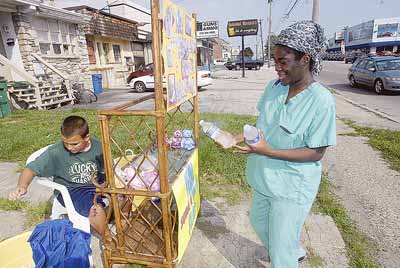
Jonathan Whitby of West Norriton sells several waters to Alison Pikalyuk on Friday. Jonathan’s mother has a cousin that visited Cambodia for a year and discovered a village in need. It costs $150 just to send a package to Cambodia, so Jonathan and his family are trying to raise money to send school supplies and toys there. The Whitby family will be collecting donations, selling waters and Ty toys through Sunday of this week. This was Jonathan’s idea of a way to help others in need. Andrea J. Stanley/The Times Herald

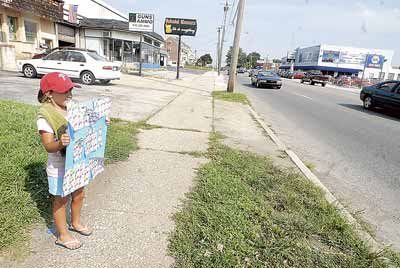
Samantha Whitby stands on West Main St. in Norristown holding up a sign that reads 'Please help me make a difference' on Friday. She is the sister of Jonathan Whitby. Andrea J. Stanley/The Times Herald

A collage of pictures from the village that the proceeds will be sent to rests on Jonathan’s stands. Andrea J. Stanley/The Times Herald


via Khmer NZ

Published: Friday, July 23, 2010

By GARY PULEO
Times Herald Staff

WEST NORRITON — A buck was all it took for folks to stay hydrated in Friday afternoon’s shirt-soaking heat while helping a good cause at the same time.

Even though he’s just 10 years old, Jonathan Whitby was so moved by stories he heard about poverty in Cambodia he decided to get a little fundraising chill going right outside his West Main Street home.

Early Friday afternoon he and his mom began selling icy bottles of spring water and frosty cans of Pepsi to thirsty pedestrians and drivers who pulled over when they spotted the sign.

The crowd got to view a photo board Gina had put up depicting Cambodian children with Beanie Babies that had been donated through missionaries’ efforts.

The colorful toys were all the rage with the kids, who are deprived of many necessities but snuggled up quickly to these little amenities that many other children take for granted.

“Our cousin Glenn went over to Cambodia for a year and saw how much they needed help,” Gina said. “He worked with missionaries at the church who were sponsoring some of the families so the kids could go to school.”

Inspired by the kids’ love of Beanie Babies, Gina and Jonathan went to a discount outlet nearby and bought more than 100 Beanie Baby bears to send to Cambodia, along with school supplies and flip-flops.

Gina quickly found out that these purchases cost her next to nothing compared to the price of getting them to their destination.

“It will cost $150 to ship one box,” Gina noted. “And the box is not that big. But it can make such a difference over there. We’re trying to raise the money for the shipment with the water and soda sales.”

Though a few people were buying five bottles at a time, Gina said business was a little sluggish compared to her predictions for the weekend.

“I think because it’s a weekday and people are just trying to get home from work it’s not as good as it will be on Saturday and Sunday,” she said, adding that the stand at 1453 W. Main St., Jeffersonville, will be open from 10 a.m. to 5 p.m. both days.

Gary Puleo can be reached at 610-272-2500, ext. 205, or gpuleo@timesherald.com .

Saturday, 24 July 2010

Cambodia, Vietnam to open another auxiliary border gate

via Khmer NZ

07/24/2010

Tan Bien district in the southwestern province of Tay Ninh and Romeas Haek district in the Cambodian province of Svay Rieng have agreed to open an auxiliary border gate on the shared borderline.

An agreement to this effect was signed between officials of the two districts on July 23.

The Ben Nam Chi – Ta Ro border gate will be the 11th of its kind to be opened along the border between Tay Ninh and Cambodian provinces to facilitate people’s travel and the flow of goods from both nations.

In recent years, Tay Ninh authorities have exempted import tariffs for goods worth less than VND2 million a person a day, and opened quarantine areas for imported animals.

Statistics shows two-way trade turnover via border gates between Tay Ninh and Cambodia provinces reached US$150 million in the first seven months of this year, US$50 million higher than the same period last year.

Vietnam’s imports include rubber, timber, processed rubber latex, cassava, maize, cigarettes and cattle, while its exports are plastic products, fruit and vegetables, instant noodles and handicrafts.

Ambassador to Cambodia: Who is Carol Rodley?


via Khmer NZ

Saturday, July 24, 2010

A career officer in the Senior Foreign Service, Carol A. Rodley is serving her second tour in Cambodia, having worked in the Southeast Asian country in the late 1990s. Although she has served in many capacities in the State Department, Rodley is well-versed in issues of intelligence and counter-terrorism.


A native of Massachusetts, Rodley graduated from Smith College in 1976.

Her Washington assignments have included executive assistant to the Bosnia coordinator for the Dayton peace accord negotiations; deputy director of the secretariat staff; Cyprus desk officer in the Office of Southern European Affairs; senior watch officer in the Operations Center; and intelligence analyst in the Russia Division of the Bureau of Intelligence and Research.

Rodley’s overseas assignments have included postings in Germany, South Africa, the Dominican Republic and Pakistan.

From 1997-2000 she worked her first tour in Cambodia, as deputy chief of mission at the American embassy in Phnom Penh. During this time, she supported bringing former Khner Rouge officials to trial for crimes against humanity before an “international court.”

Rodley then attended the State Department’s senior leadership training course, the 43rd Senior Seminar, at the Foreign Service Institute from 2000-2001.

For the next two years she served as deputy executive secretary in the Executive Secretariat, until July 2003.

From 2003-2006 Rodley served as acting assistant secretary and principal deputy assistant secretary in the Bureau of Intelligence and Research. While in this position, she put together “Team Al-Qaida,” a group of State Department analysts whose goal, in Rodley’s words, was to “deepen our understanding of both specific terrorist networks and the broader international jihadist movement” using “computer-aided methods to mine the volumes of data and have developed particular expertise on terrorist support networks and terrorist facilitators.”

She relocated to Afghanistan to work as counselor for political and military affairs at the U.S. Embassy in Kabul, before returning to the states to serve as a faculty advisor at the Foreign Service Institute for Afghanistan and Iraq training.

President George W. Bush nominated Rodley to be ambassador to Cambodia in May 2008, a post she finally took over on October 24.

In May 2009, Rodley ruffled the feathers of the Cambodian government when, while delivering the opening speech at an anti-corruption concert in Phnom Penh, she claimed that Cambodia loses $500 million a year to corruption.

Rodley is married to David Newhall, and the couple has three children. Rodley speaks Khmer, German, Spanish, Urdu, and Hindi. -Noel Brinkerhoff

Repeat sex offendersshould feel full weight of law

By Daphne Bramham

Vancouver Sun

July 24, 2010

via Khmer NZ

Png / Kenneth Robert Klassen has pleaded guilty to 14 counts of sexual interference with minors and one count of possession of child pornography.
Photograph by: Nick Procaylo, Vancouver Sun


Within hours of Kenneth Klassen arriving in Cambodia, the first of eight girls -- all under the age of 14 and one believed to have been eight -- arrived at his hotel.

In two and a half days, the Burnaby art dealer fondled, touched, probed and had oral sex and intercourse with all eight of them.

He has admitted to that and to having captured at least some of it on video -- "souvenirs" of his trip.

Klassen has also admitted to having sexually interfered with six Colombian girls ranging in age from 11 to 13.

Klassen is a sex tourist.

In May, he pleaded guilty to 14 counts of sexual interference with minors and one count of possession of child pornography after he lost his constitutional challenge of the law.

Sex tourism is shorthand for what predators do who travel to countries where they can sexually abuse, assault and exploit the poorest and most vulnerable. Often, their prey is children.

On Wednesday, Klassen will be sentenced.

The Crown has asked Justice Austin Cullen of the B.C. Supreme Court to sentence the 59-year-old to 12 years in federal prison: 10 years -- the maximum -- in concurrent sentences for having sex with minors and two years for pornography possession.

Klassen's defence team has asked for half that.

If Cullen agrees with the Crown, it will be the longest sentence ever given a Canadian sex tourist. However, this is only the third case to go to trial since the legislation was passed 13 years ago.

What Klassen's case highlights is just how easy it is for well-organized, predatory pedophiles with money to get what they want abroad.

It's so much easier than here, where we have better laws, better enforcement and a better social safety net that means large numbers of children aren't forced to beg in the streets.

Klassen lived in Colombia for 20 years and has admitted that he first had sex with a prepubescent girl when he was 27 or 28. He has admitted his sexual predilection for girls and easy access to them made him "reckless."

His lawyer, Ian Donaldson, told the court that Klassen's abuse of children arose "from the milieu in which he was living" where it was "common" for men to have sex with young girls.

He went on to say that Klassen's offences were "circumscribed by his geographical location," since there is no evidence of him engaging in this kind of "anti-social behaviour" in Canada.

But as Crown counsel Brandon McCabe pointed out, Klassen must have known what he was doing was wrong, because he had his face edited out of all of the homemade videos of him with girls under 14 and he didn't bother doing that with girls over 14.

Among Klassen's claims is that he never had sex with a child in Canada. Too dangerous, which is exactly the reason that Parliament enacted legislation that allows Canadians to be charged in Canada with sex crimes committed abroad.

Here in Canada, Klassen satiated his appetite for prepubescent girls with pornography. Some of it was purchased abroad; some was homemade movies.

(More than two hours of clips from Klassen's collection were viewed by Cullen during the two-day sentencing hearing. Following a request from The Vancouver Sun, Cullen has ordered Crown counsel Brandon McCabe to make descriptions of those clips available to reporters.)

McCabe is asking for the maximum penalty for Klassen, arguing that Klassen's offences were aggravated because of the girls' ages, because some of their statements that they were threatened or coerced by him, and because they were so desperately poor that some didn't have soap.

Donaldson rejected that characterization, even though he called Klassen's actions offensive and illegal.

He claimed that there was no abuse of trust or exploitation. Repeatedly, he referred to what happened as a series of commercial transactions between willing participants.

He called the little girls -- one of whom Klassen gave a teddy bear -- "sex trade workers."

To establish a basis for requesting a sentence of only six years, Klassen's lawyers noted that Donald Bakker, the first Canadian convicted as a sex tourist, received only five years for having sex with seven Cambodian girls under the age of 14, and five years for sexual assault of Canadian women in the sex trade.

Klassen's second lawyer, Leonard Doust, went through a long list of other cases in which children as young as six had been horrifically abused by relatives, teachers and even a former B.C. Provincial Court judge.

He read off horrific descriptions of violence against them and pointed out that the sentences for offences far worse than what Klassen pleaded guilty to were only in the six-to-10-year range.

Doust may have intended to paint his client as a lesser among evils.

But what was also highlighted was a long and sad history of failure to punish these vile pedophiles and predators to the full extent of the law.

Cullen has an opportunity to set a new standard and precedent.

Thai PM: Cambodia continues pushing management plan for ancient temple

http://www.mcot.net/

via Khmer NZ

BANGKOK, July 24 -- Thailand is still objecting to Cambodia's move to proceed with its unilateral management plan for the environs of the ancient Preah Vihear temple at next week's World Heritage Committee (WHC) meeting, scheduled to be held in Brazil beginning Sunday July 25 and extending through August 3, Thai Prime Minister Abhisit Vejjajiva said on Saturday.

Mr Abhisit’s remarks were made after Minister of Natural Resources and Environment Suwit Khunkitti, leading the Thai delegation to attend the 34th meeting of the United Nations Educational, Scientific and Cultural Organization's heritage committee in the Brazilian capital of Brasilia.

He said Mr Suwit phoned him from a stopover in Paris where he met the UNESCO director Friday, telling him that the Cambodian government is still determined to attend the WHC session and propose that it should be allowed to conduct its management plan for the 11th century Preah Vihear temple.

Cambodia's plan does not show the border demarcation between the neighbouring countries and the Cambodian government had insisted that it would not involve the northern and the western parts of the temple, Mr Abhisit said.

Mr Suwit told him he would not accept the Cambodian plan. Now Thailand must inform the international community on the issue and also follow the meeting in Brazil closely, said Mr Abhisit.

Mr Abhisit said he informed Mr Suwit that the temple issue would be discussed in Brasilia on Wednesday and that if the Thai delegation needs support the Cabinet canto issue a resolution.

Cambodia and Thailand have been locked in nationalist tensions and a troop standoff at their disputed border since July 2008, when Preah Vihear temple was granted UNESCO World Heritage status. The site was awarded to Cambodia by the International Court of Justice in 1962 in a decision that rankles most Thais.

In another development, Mr Abhisit said Thailand has proposed to host a WHC session in the next two years and Cambodia is expected to make a similar request. (MCOT online news)

HCMC doctors to give free treatment to Cambodian patients

via Khmer NZ

Saturday ,Jul 24,2010

A patient with nasal sinus inflammation is examined at the HCMC ENT Hospital (Photo: Bacsi.com)

A group of Ho Chi Minh City doctors in eye, ear-nose-throat, and obstetrics and gynecology is going to take a trip to Cambodia to offer free examination, treatment and surgery to Cambodian patients.

The doctors, from the Eye Hospital, Ear-Nose-Throat (ENT) Hospital, and Hung Vuong Obstetric and Gynecological Hospital, will arrive in Cambodia on July 30, at the invitation of the Phnom Penh-based Preah Ket Mealea Hospital under the Royal Cambodian Army.

During the 4-day trip, the eye doctors will give examination and treatment to 200 patients and perform Phaco cataract surgery for a number of them. Meanwhile, the doctors in ENT and obstetrics and gynecology will examine and give medicines to about 450 patients.

By Tg. Lam – Translated by Truc Thinh

Justice for Cambodia victims about to be served

Around 1.7 million died at the hands of Pol Pot's regime

TV3 News (New Zealand)

via Khmer NZ

Sat, 24 Jul 2010

By Janika ter Ellen

Former Olympic rower Rob Hamill is in Cambodia, but not to bask in the sun or to attempt another transatlantic record.

He's there for the verdict of a war crimes trial involving the man he blames for his brother's killing over 30 years ago.

Mr Hamill surveys the killing fields in the Cambodian capital, Phnom Penh, where the skulls of Khmer Rouge's murdered victims lie - exhumed from mass graves after the regime's defeat.

They represent the 1.7 million men, women and children who died during Pol Pot's reign.

"I can't quite reconcile how justice can ever be served with the nature and the way these people's lives were taken," he says.

Pol Pot's long dead, but Mr Hamill is here for the sentencing of his trusted commander Kaing Guek Eav, known as Duch, for his part in the genocide.

During the trial, Mr Hamill had the chance to speak directly to the frail maths teacher-turned killing commander, and wished upon him the punishments he had dished out to his victims.

"I have imagined your scrotum electrified, being forced to eat your own faeces, being nearly drowned, and having your throat cut."

Duch ran the S21 prison where at least 14,000 were detained - including Mr Hamill's brother.

Kerry Hamill had been sailing to Bangkok in 1978 when his yacht veered into Cambodian waters - he was captured, tortured then killed.

Family found out about Kerry's fate 16 months later, after the regime fell in 1979. It was too much for Mr Hamill's younger brother john, who jumped from a cliff soon afterwards.

Mr Hamill says he's more accepting now, and the verdict brings closure for the family.

"After 30 years of our own family kind of suppressing it - and kind of not talking about it - and the effect it had on our family, I think this is a very special time and I'd like to think he's looking down on us thinking, yeah, it's about bloody time."

Duch's verdict and sentence will be handed down in two days.

FAO: Bugs Take a Bite Out of Hunger

Bob Burns | Washington, DC
23 July 2010

via Khmer NZ

Photo: VOA – S. Baragona
Selling insects as snacks in Cambodia

Most people try to keep insects out of their kitchens. But many of the creepy-crawlers are edible and quite nutritious. That is, if you can get past the idea of eating something usually considered a pest. In Laos, that is not a problem, since nearly everyone likes to snack on edible insects. Now, the United Nations is encouraging even more bug-eating there to solve the country's high rates of child malnutrition.

Larrisa Brunn of the U.N. Food and Agriculture Organization admits the anti-hunger fight has entered somewhat unfamiliar territory.

"We've done a nationwide survey here in Laos and it showed that nearly 95 percent of the Lao population eats insects. So this shows how insects are part of the diet here and part of the culture, part of their nutrition," Brunn said. "So it's not like we are introducing something new, on the contrary we are working with the existing food base."

VOA Photo – S. Baragona
Insects are eaten widely in Cambodia. The UN hopes to fight child malnutrition in Laos with nutrient-packed bugs

Researchers estimate that worldwide, there are more than 1,700 edible insects. In Laos, grasshoppers and crickets are among the most popular, but locals also eat beetles and grubs and insect larvae. The insects are rich in protein and fat, as well as essential vitamins like iron and calcium. While some bugs can be eaten straight from the field, it is tastier and safer to prepare them Brunn says.

"Just like any meat, they are normally cooked. I'm sure there are some you can eat live, but here in Laos traditionally they are cooked. The normal way they will be served is quickly deep fried but I've also tasted very traditional recipes which can be made with fish and other meats with insects added. They can be flavored as well with cheese. So there are many ways insects can be eaten."

Bug eating has been popular for hundreds of years in the region. The FAO is hoping to capitilize on that trend by raising the income of local bug collectors and increasing the yield of bug farmers. That, in turn, could lead more people to rely on the critters for the daily nutrition. Brunn said the FAO is working with the Lao government and insect aficionados to improve their yield and make it sustainable.

"For the past year, we've had a small pilot which where we worked with some farmers in Vientiane, the capital of Laos, trying out insect farming and now in May we had a bigger two year project approved where we will be working with a bigger group of farmers and the main aim being on nutrition, because insects are highly nutritious and part of the culture in Laos. They are tied to the diet. They can provide income opportunity and also diversity in the project."

VOA Photo – S. Baragona
Insect merchant in Cambodia


As for people who may be squeamish about eating a fried grasshopper or termite, according to the FAO's Brunn, taste is not necessarily the biggest issue.

"In the West, I know in North America and Europe insects are not part of the diet like they are in Southeast Asia, Africa and Latin America. So for us, myself a European, it can be a repulsive experience once you first try it." Brunn points out, "Somebody just said to me when you eat a cow, you don't put the whole animal on the table. So we have to transform crickets for example to a cricket hamburger. You may actually like the flavor and find them delicious."

Part of the FAO's bug campaign in Laos is to encourage traditional insect eating habits and reassure people that swallowing a silkworm is not something to be embarrassed or ashamed of. Brunn said the bugs are an important part of culture, and a potentially important contribution to a diverse and healthy diet.

Suwit takes off for temple talks


via Khmer NZ

Published: 24/07/2010

Natural Resources and Environment Minister Suwit Khunkitti is in Paris today to meet with Unesco director-general Irina Bokova to express Thailand's concern over the Preah Vihear temple issue.

Suwit: Admits it’s a very tough mission

Unesco's World Heritage Committee (WHC) will open its annual meeting in the Brazilian capital Brasilia tomorrow, and Mr Suwit will also attend to oppose Cambodia's proposed management plan for the Preah Vihear temple and its buffer zone covering the 4.6 square kilometre disputed area claimed by the two countries.

APINYA WIPATAYOTIN talked with him about his mission before he left the country on Thursday.

Regarding the 34th session of the WHC, what do you expect to happen?

I admit that this mission is very tough for me. Thailand, as one of the WHC's 21 commissioners, has never seen Cambodia's plan, and that means the WHC has not received the plan too despite the fact that WHC rules require such a plan to be submitted six months before the meeting for consideration.

Are you confident that Unesco will listen to our voice?

I believe that since the Preah Vihear temple was registered as a World Heritage site, there have been many confrontations between Thailand and Cambodia, including border confrontations or even between the civic sectors of both sides. This is the point and Unesco needs to listen to the country which is now suffering from its decision.

Moreover, the WHC charter says that a qualification for a World Heritage site is that it brings peace. I do hope that it will cooperate with Thailand to find out the best solution to end the problem.

What is Thailand's position in this round of the WHC meeting?

First of all, I would like to assure the public that I will do my best. My team comprising officers from the Foreign, Defence, Culture, and Natural Resources and Environment ministries has worked very hard for over a year on the mission. So I am confident that we will not let the Thai people get upset.

Prime Minister Abhisit Vejjajiva previously said clearly that Thailand will not support the Cambodian plan until there is clarity over land demarcation.

In the event the WHC agrees to endorse Cambodia's plan, we will raise a strong objection.

As you told me that Cambodia has not yet submitted its plan to the WHC, do you think this could delay the discussion of the issue?

I don't know. I can't say at the moment whether it is good or bad for Thailand and we need more time to study it.

What is Thailand's progress in submitting other areas near the Preah Vihear temple which are on Thai soil as world heritage sites?

We will not discuss that issue until there is clarity over the land demarcation of the Thai-Cambodian border.